 |
 |
 |
|
  |
|
 |
Home |
|
Designers & Architects |
|
Homeowners |
|
Exclusive Collections |
|
Showroom |
|
Tile Information Center |
|
Company Profile |
|
Commercial Projects |
|
Residential Projects |
Make
an appointment with a Rubble Tile Design Specialist at our showroom. Customer Service: |
|
 |
| When planning a tiled
environment, it helps to understand some of the characteristics and
terminology of tile. The information here is a brief overview of the
subject for designers, architects, or homeowners. For more detailed
information and guidance, please call our showroom and make
an appointment to meet with a Rubble Tile Design Specialist. The nature of tile. Different projects call for different kinds of tile. Tile can be made out of a variety of materials: ceramic, porcelain, glass, stone, metal, or composites. Choose the kind of tile for your project based first on functionality. Is your project commercial or residential? Will the tile be on the floor, or on a wall or backsplash? A floor that gets heavy traffic will require a durable tile, such as porcelain. A floor that gets wet, such as a bathroom, may require a non-slip tile. Discuss the nature of your tiling project with one of our Design Specialists. Success with tile requires good technical information and planning, as well as a sense of design. Designing with tile. When designed and installed properly, tiled environments are practical and beautiful. Tile can be set in patterns from simple to complex. The design possibilities are endless, and often overwhelming. One of our Design Specialists can help you through the design process, and show you different design options based on your preferences and your specific project. Call the Rubble Tile showroom to make an appointment. Tile care. Care for your tile per the manufacturer's intructions. Ask your Rubble Tile Design Specialist for care instructions specific to your installed tile, or call Customer Service (952-697-3232). For basic tile care information, click here for our Tile Care pdf. |
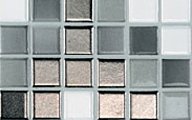
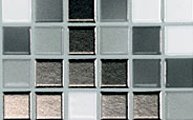
| Jasba M2 Gray Platinum | |
| Common
Tile Terms Bullnose: Rounded top edge used as the last tile in a wall installation that doesn’t extend to the ceiling or up to the cabinet line, or to turn an outside edge. Chair Rail: Cap piece with a distinctive architectural shape. Used to cap a wainscot or as a decorative element. Counter Rail: V-or L-shaped tile for finishing the exposed edges of countertops. Cove Base: A base trim piece that curves concavely to join the floor tile. Deco or Decorative: Tile with designs, pictures, or relief fashioned with artistic creativity. Decorative tiles are generally used as accents in a field of solid color. Diagonal Set: Tile set at a 45° angle to the wall. Field Tile:The main tile in a tile design. Floor Tile: Any type of tile designated for use on floors. It can generally be used for walls or countertops also. Listello (or Listel): Italian word for a border tile used to add interest. Lugged Tile: Tile produced with tabs on the edges for maintaining even spacing. Mitered:To cut on an angle to meet on an edge or corner (similar to picture frame moldings or celing cove molding). Mosaic: Small tiles used to make patterns or pictures on walls or floors. Out Corner: A trim piece with two connecting edges bullnosed. Pencil: Thin tile of any length usually between 1/2" and 2" in width. Straight Set: Tile set square to the wall. Rectified Tile: Rectified tile is first baked in sheets, then cut to size AFTER coming out of the kiln. This is why it can be calibrated to exact specifications. Rectified tile can be installed with “credit card” joints as small as 1/16”. Most other tile is first shaped and then baked afterwards in a kiln, so it often has as much as a 1/16" or more difference in size between tiles in the same box. Quarter Round or Bead: A narrow, convexly curved piece designed to create continuity where 90 degree angles occur. Trim: Finishing pieces used to cover exposed tile bisque (i.e. bullnose, out corners, step nosing). Wainscote: The area of a tiled wall that is installed from the floor to the chair rail height, or slightly higher, with a border or cap finishing the installation. Wall Tile: Tile intended for use on walls. Generally thinner than floor tile. While it can sometimes be used on residential floors and countertops, it is best to consult manufacturer recommendations before installation. |
|